Lady Parts
Vaginal health is a crucial aspect of women’s wellbeing. But, it is overlooked because women are made to feel ashamed about it. Lady Parts is a three-part service that aims to destigmatize vaginal health and empower young women to make informed health decisions.
DURATION
5 weeks
ROLE
Design research
Visual identity
UX Design
TEAM
Sneha Rao
Diane Hu
TOOLS
Figma
Procreate
Keyshot
Adobe After Effects
THE PROBLEM
Don't say the V Word!
58%
of women are embarrassed or unaware of the importance of talking with friends and family about gynecological health.
59%
of women believed that other people do not want to hear about their “vaginal problems”
OUR DESIGN
Lady Parts
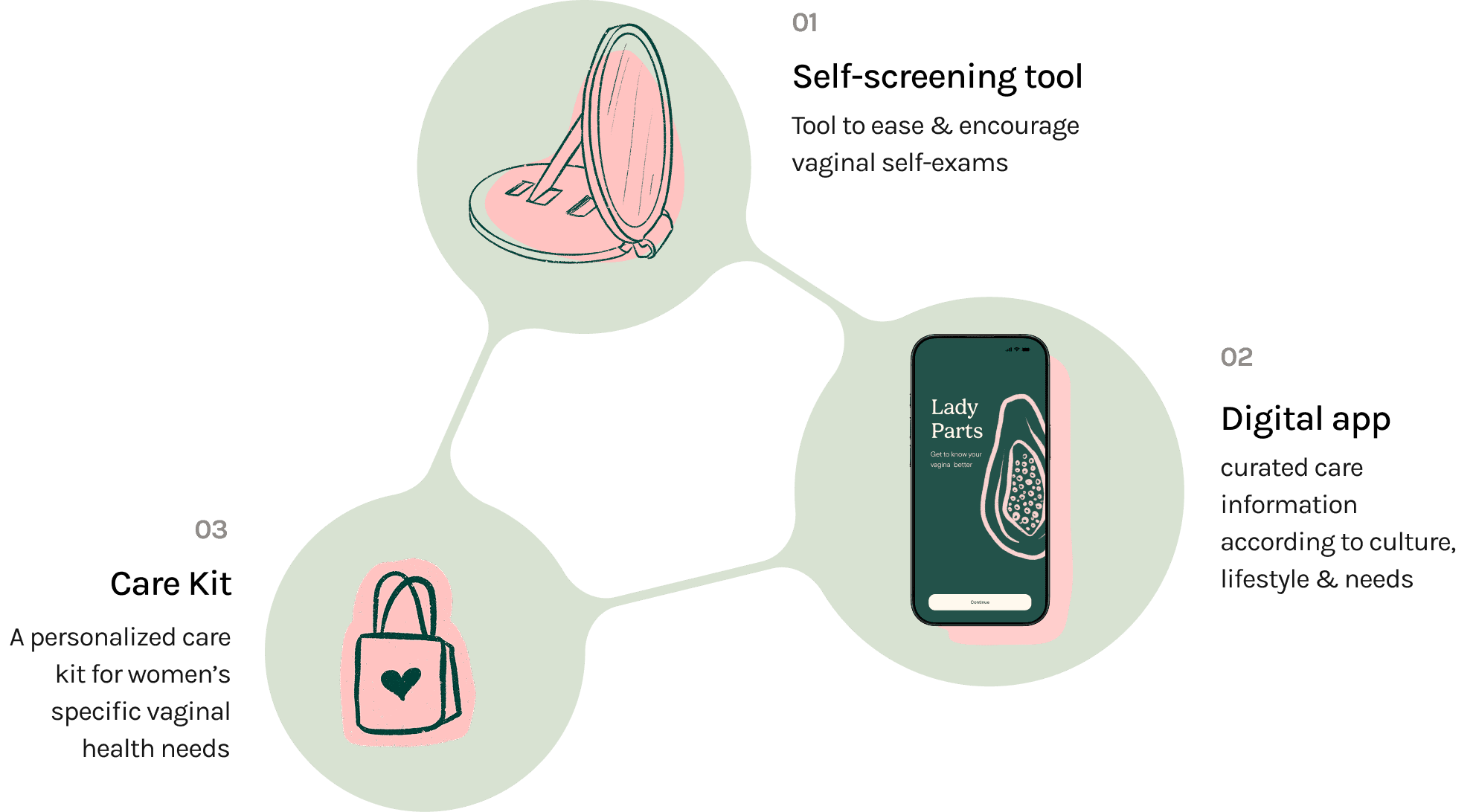
A three-component service designed to enable women with the tools, knowledge, and support they need to recognize changes early and advocate for their health.
01
The Self-Screening Tool
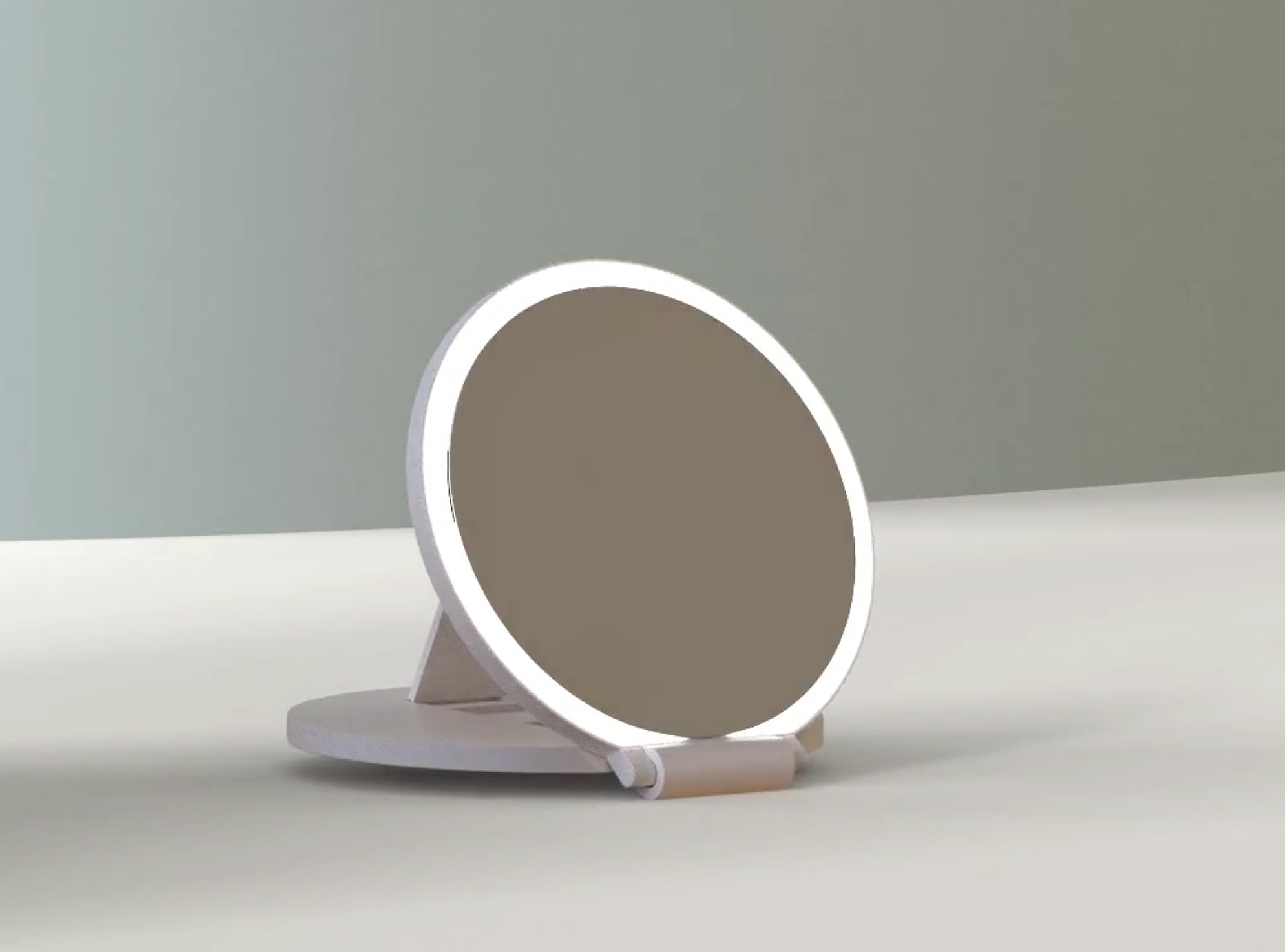
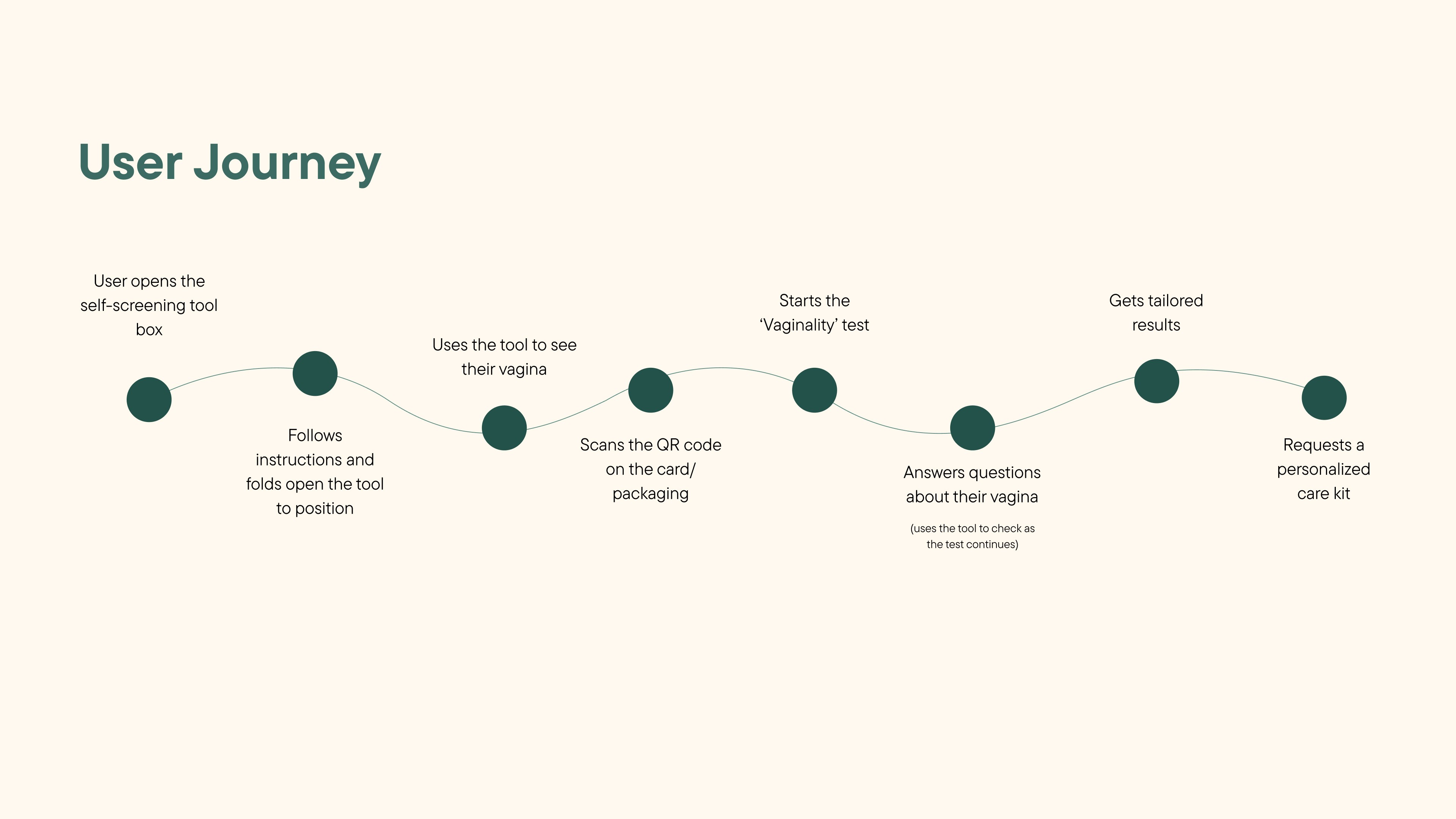
A low-cost, ergonomic aid that helps users see the vaginal and vulvar area. The aim is to do away with the current barriers, such as unclear instructions, stigma, and high cognitive effort by guiding users through a simple, confidence-building process.
02
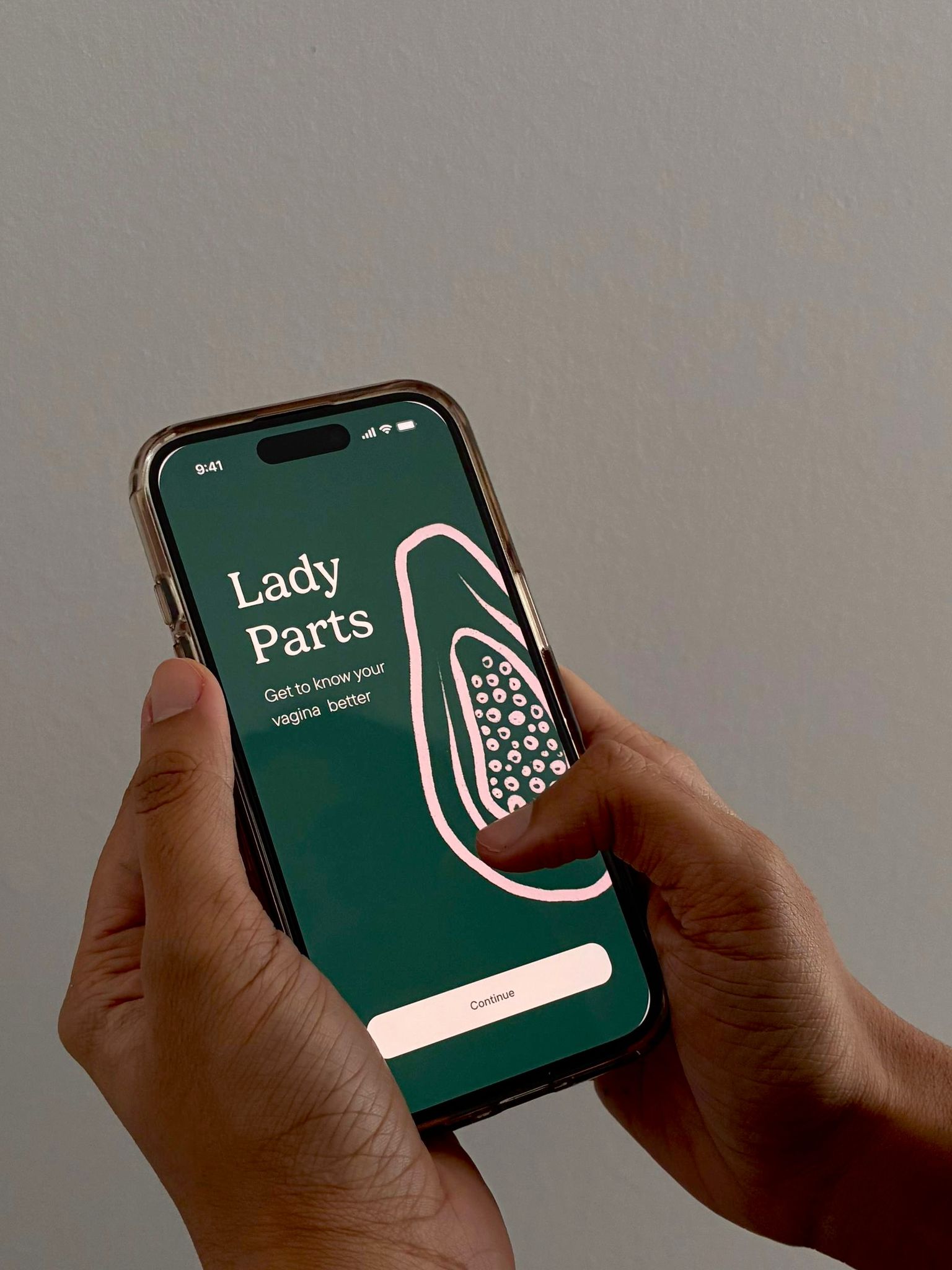
The “Vaginality” Test
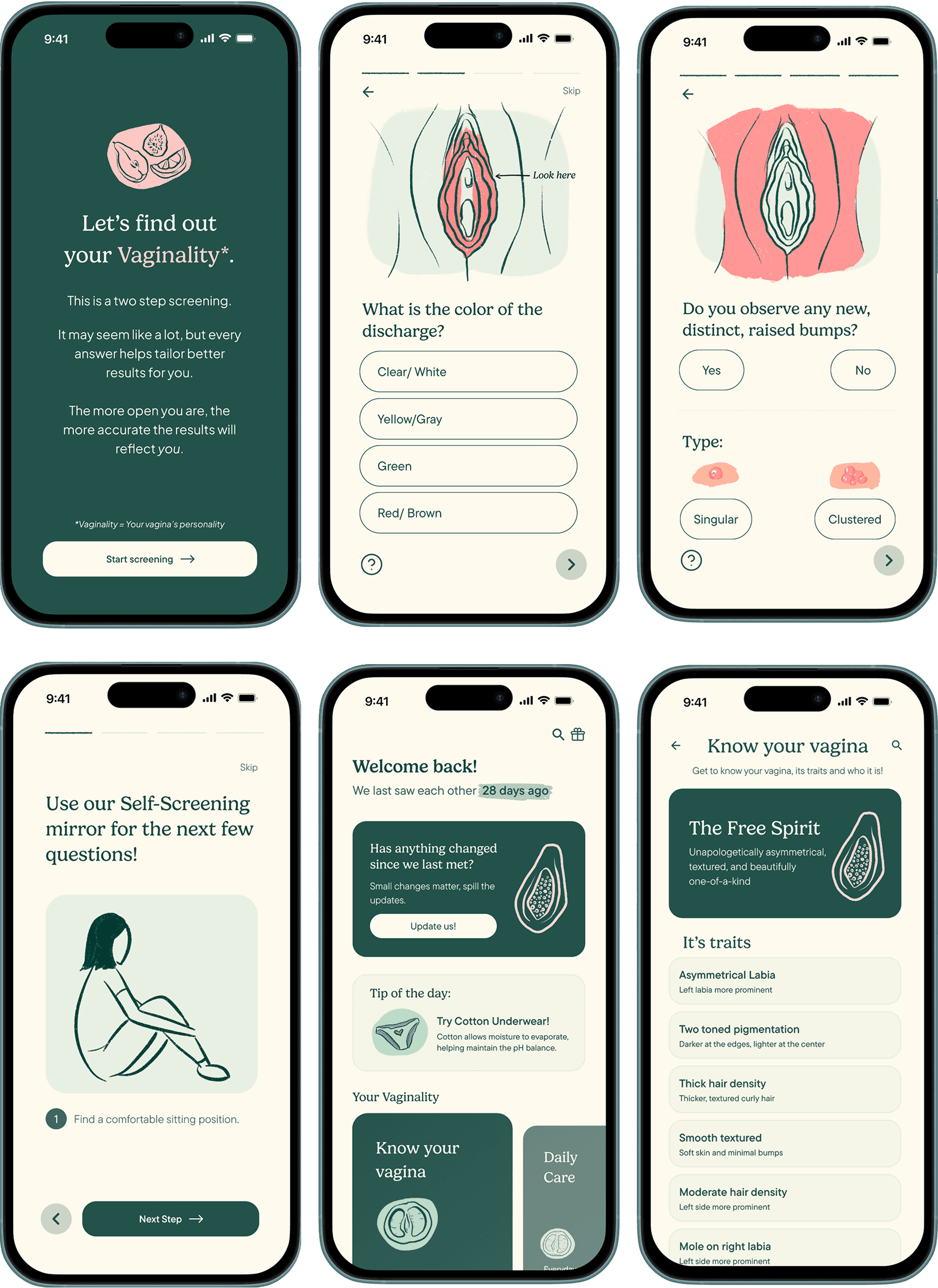
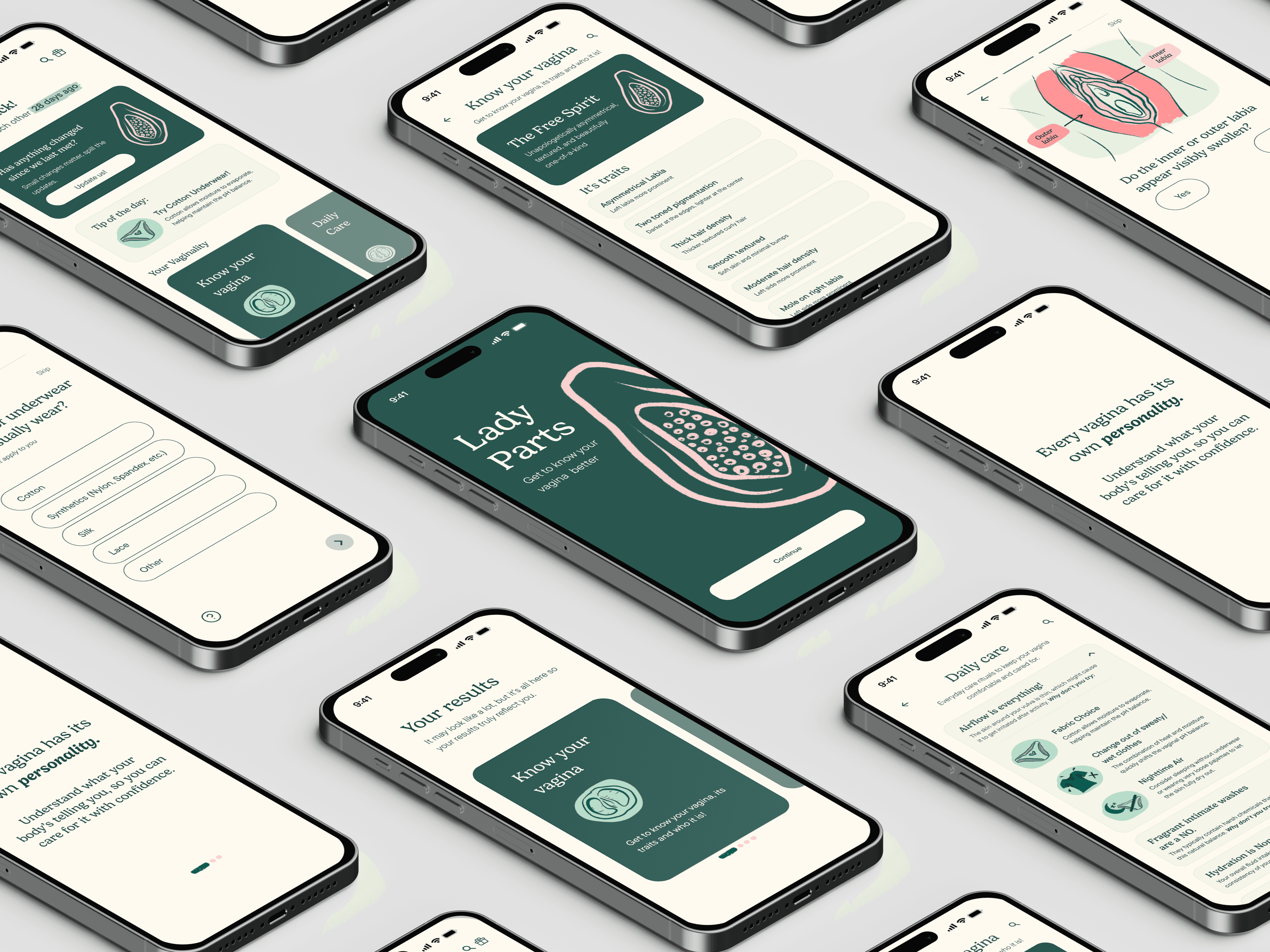
A lite app-based questionnaire that curates vaginal-care information according to users’ culture, lifestyle, and physiological tendencies. It produces personalized information cards, covering basics of daily care, myths, “doctor talk,” and warning signs.
03
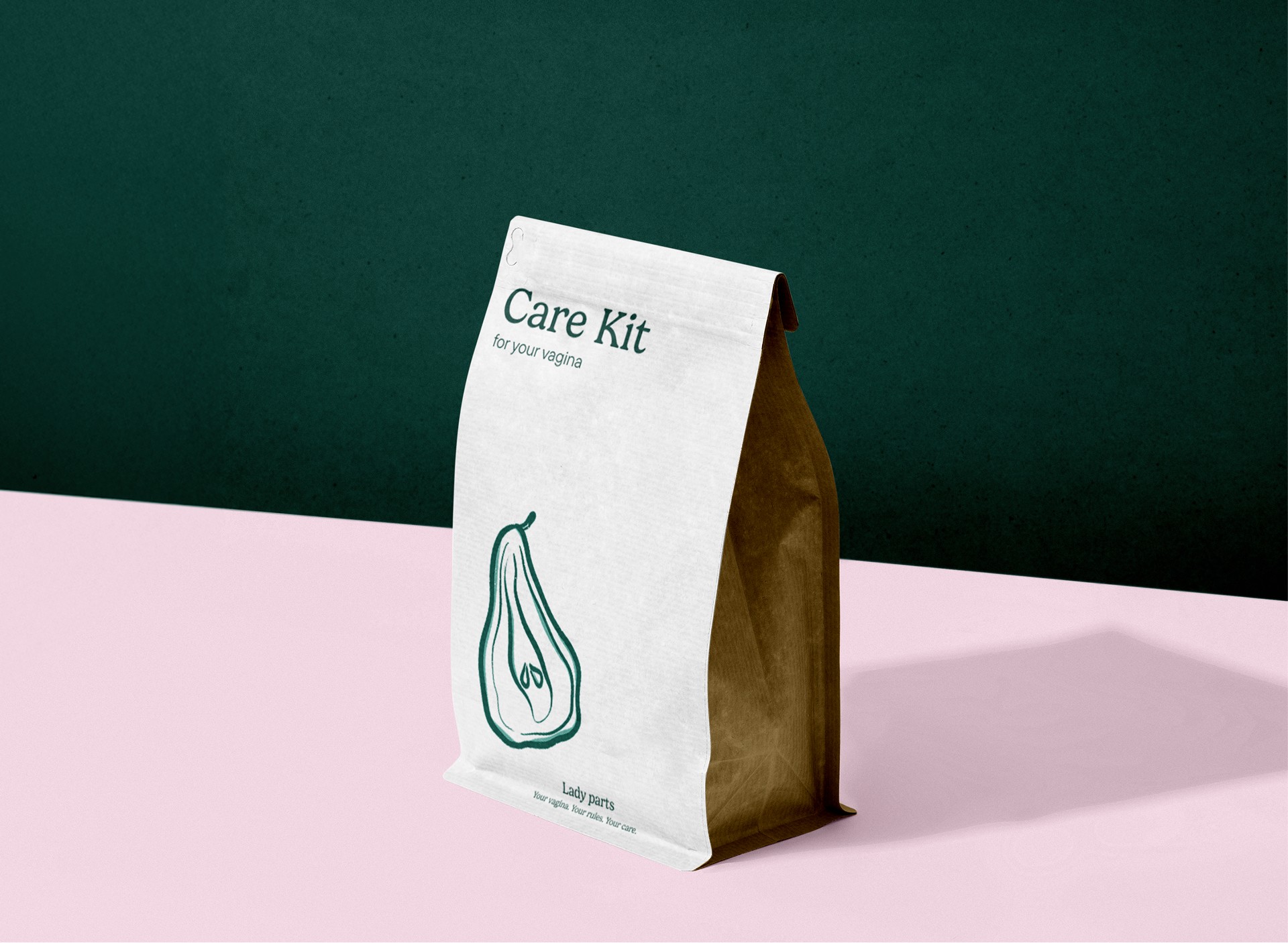
Personalized Care Kit
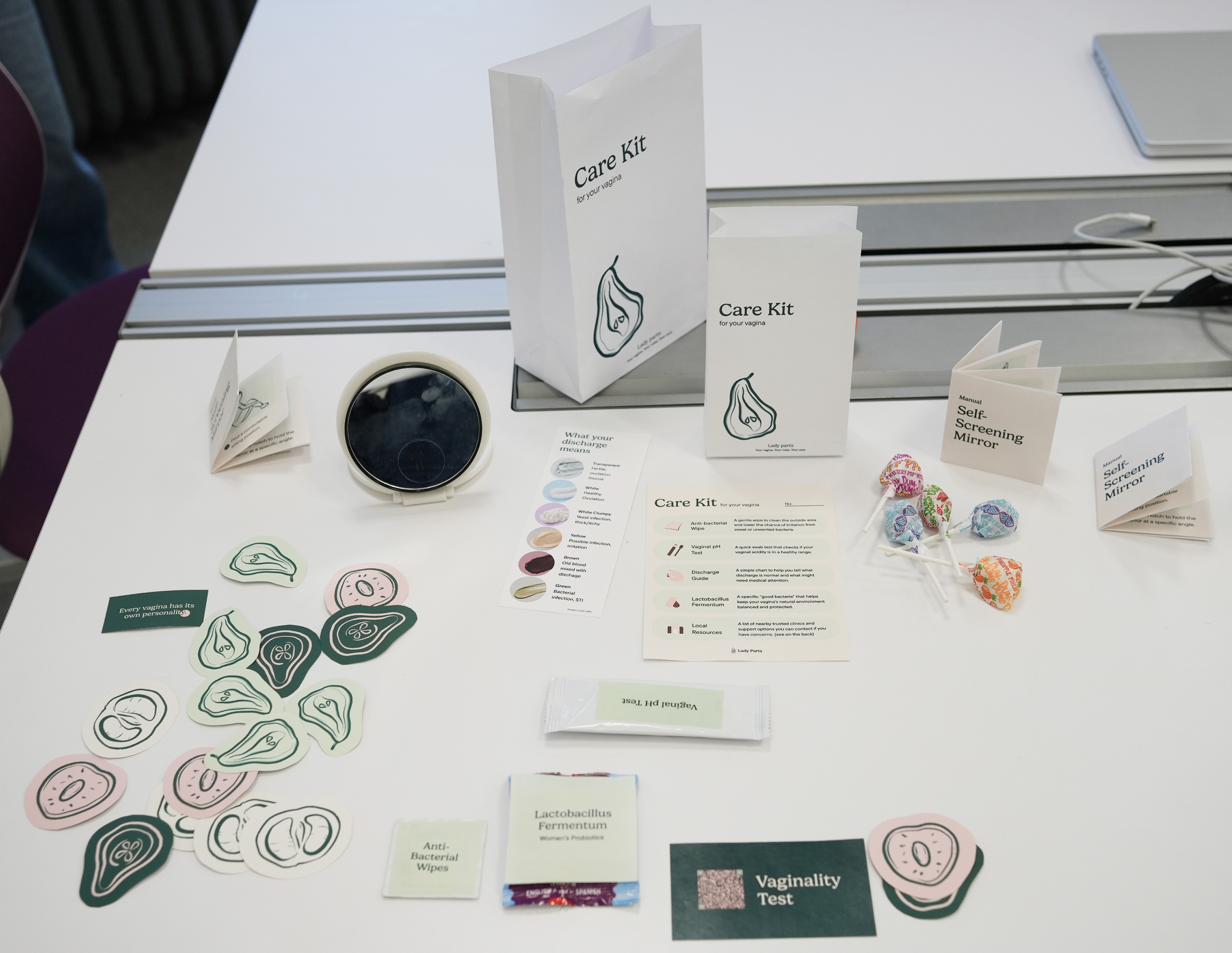
The care kit delivers supportive items tailored to the user’s Vaginality Test results. It may include daily products, screening tools, vitamins, and resource cards, assembled to reinforce healthy habits and reduce uncertainty between healthcare visits.
RESEARCH
MAPPING THE SPACE
Deep diving into Sexual & Reproductive Health
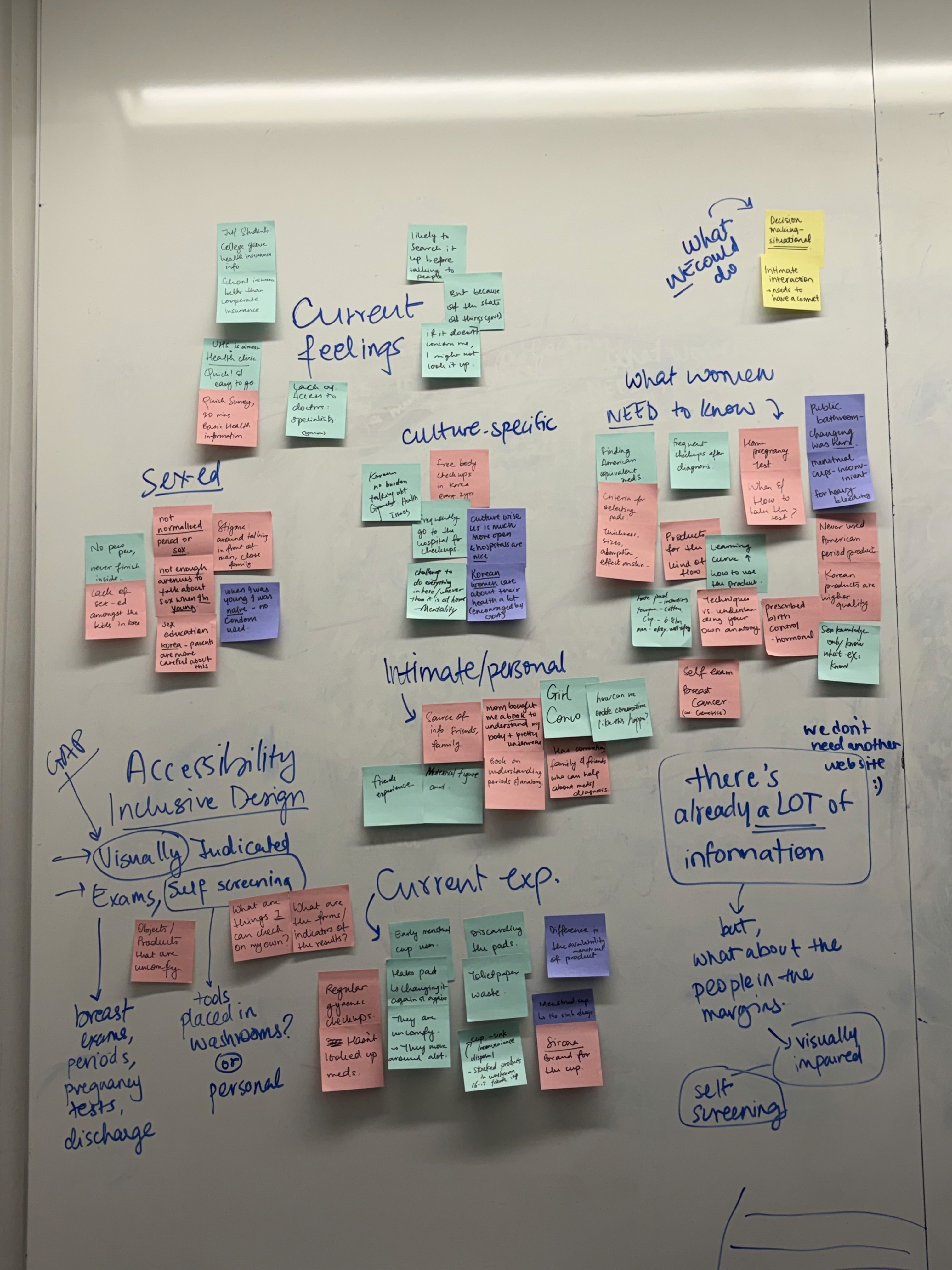
We first explored the women's health in general, to understand the system as a whole. Through multiple rounds of literature review and precedent studies, we identified certain themes that were important to address in the current landscape.
USER RESEARCH
It was important to keep the users as part of the design process, right from the start. We conducted user research with three constituent groups.
12
Female university students, through Surveys & in-depth interviews.
3
Design experts in healthcare
2
Experts from healthcare
"This generation has access to information but they don’t know what to do with it. Young women don’t know how and when to advocate for themselves."
- Brandi Bogan, Birth Doula, Pittsburgh
What we learnt from women
Women feel intimidated to go to doctors to get their reproductive/sexual health checkups due to lack of awareness.
Women want to learn what works for them. What works for one doesn’t work for another.
Women want to self-advocate.
Making decisions related to vaginal health is difficult since they have no one to talk to.
Women trust other women because it feels like information comes from experience.
Women don’t know the vocabulary related to vaginal health to explain their experience.
We also synthesized our research about Vaginal Health along with our primary research insights. Our key insights were -
01
Every vagina is unique
Research shows there’s no single “healthy” vaginal microbiome. It varies across individuals and populations. Personalized care is necessary and important.
02
Vocabulary is essential
Many women lack the language to confidently engage with healthcare providers, often feeling disempowered during medical procedures. Women need the right words to build body literacy.
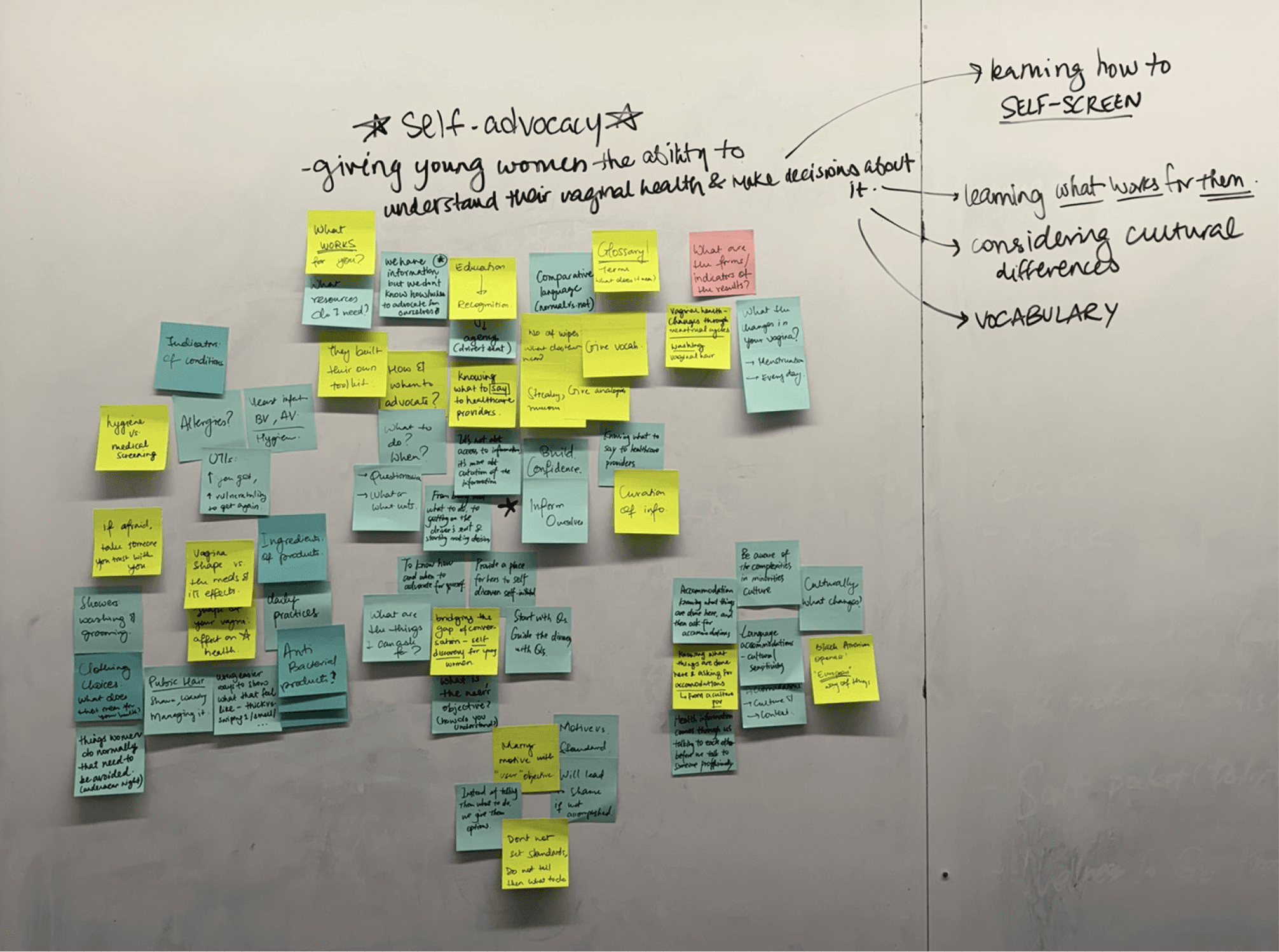
Self-Advocacy is key
Self-advocacy emerged as central to our research. Stigma, silence, and limited resources often leave women unsure of what works for their own bodies.
We chose to intervene at this moment of self-awareness, aiming to help women better navigate the system.
MAKING
Building the concept
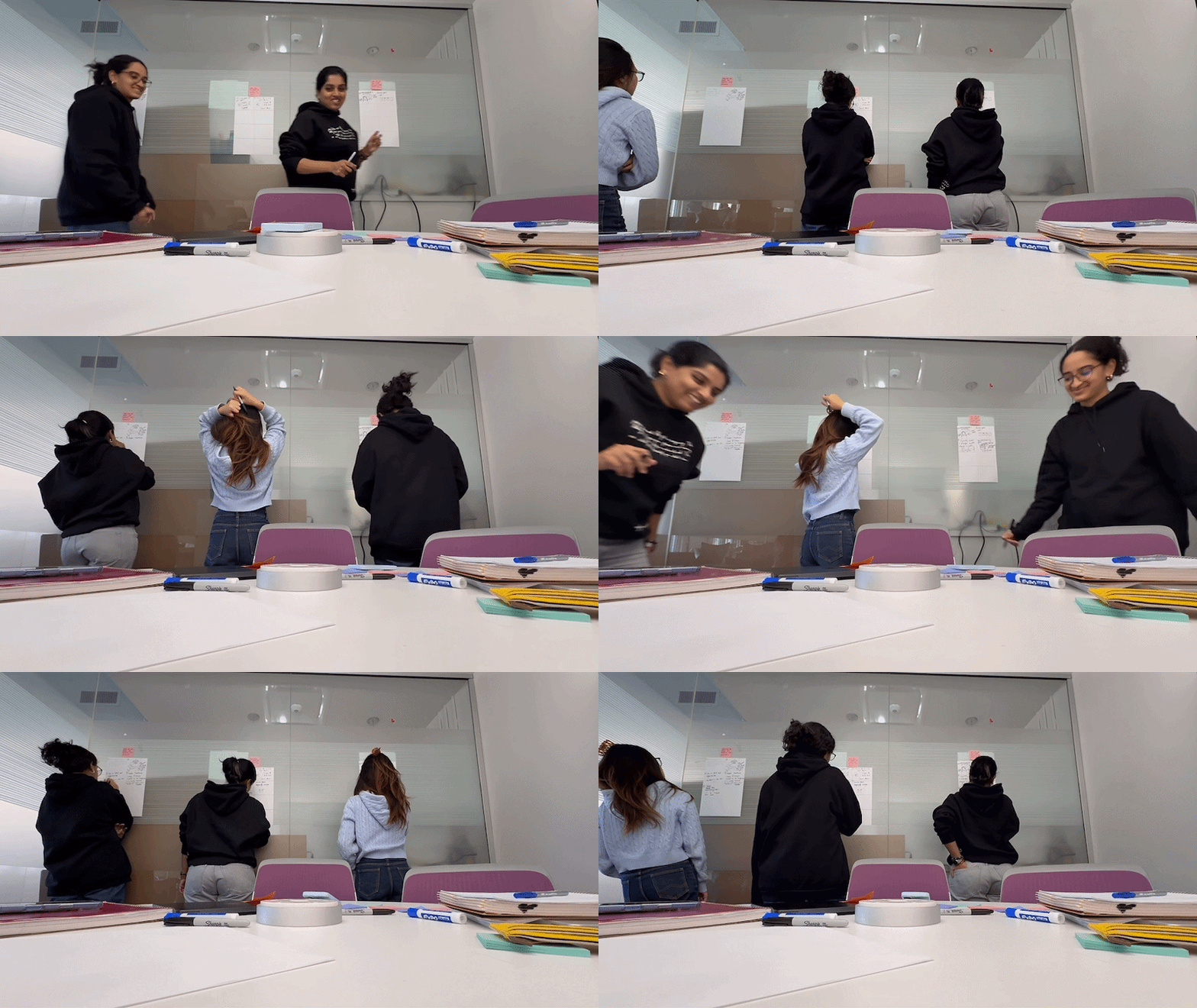
Rapid ideation under a minute, as a group :)
OUR APPROACH
Normalizing vaginal health and intervene at the point of self-awareness
THE APP
User Flow
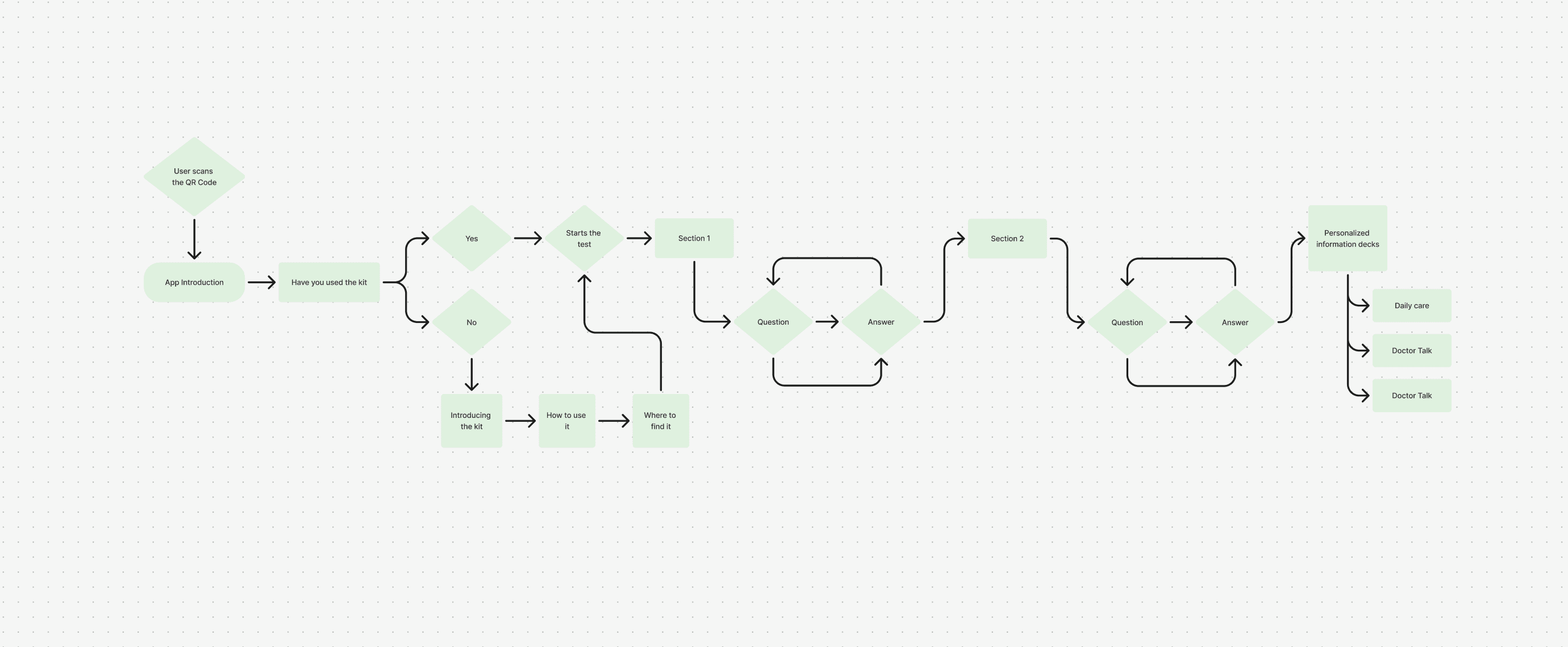
User Journey
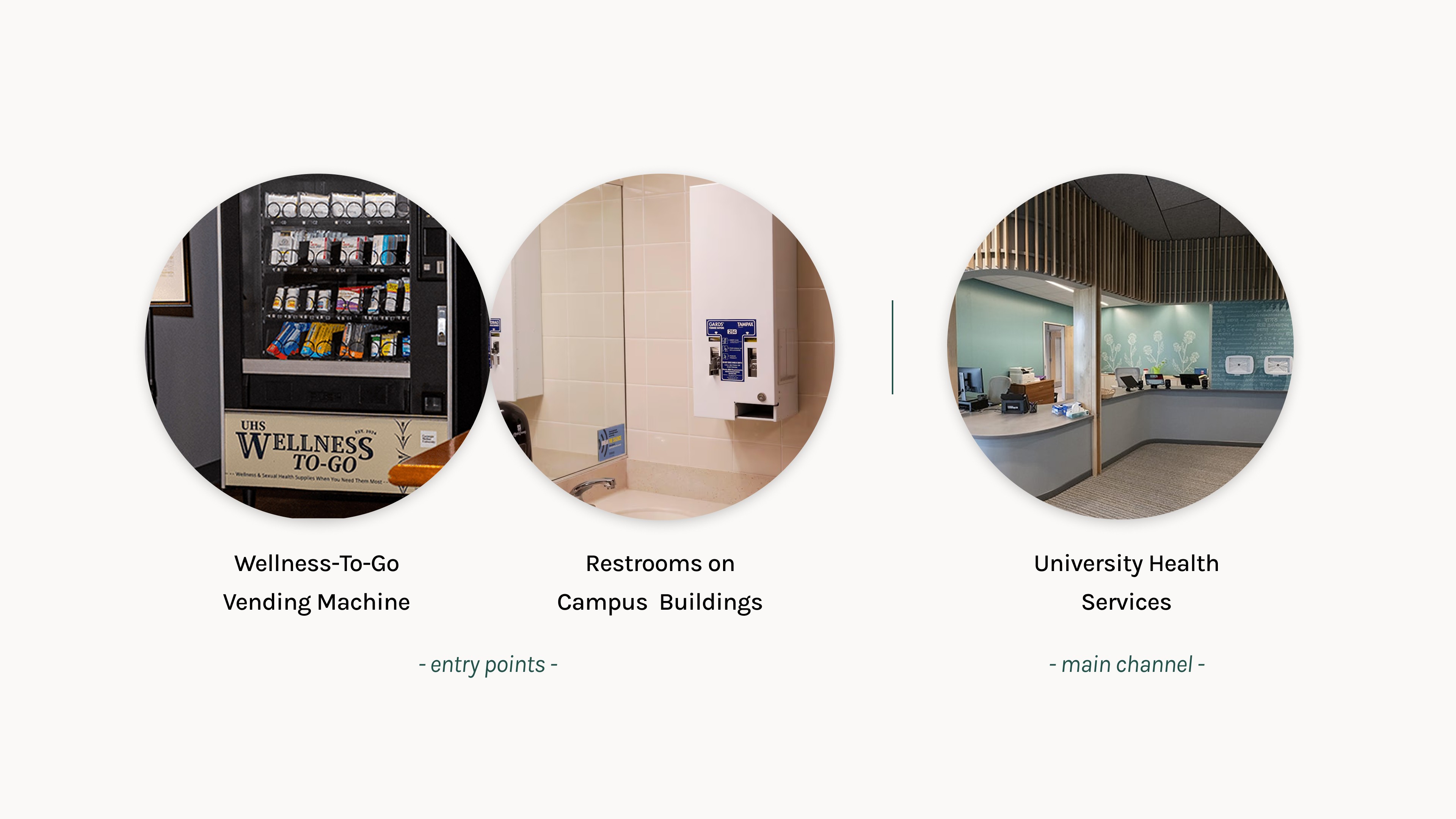
Access points