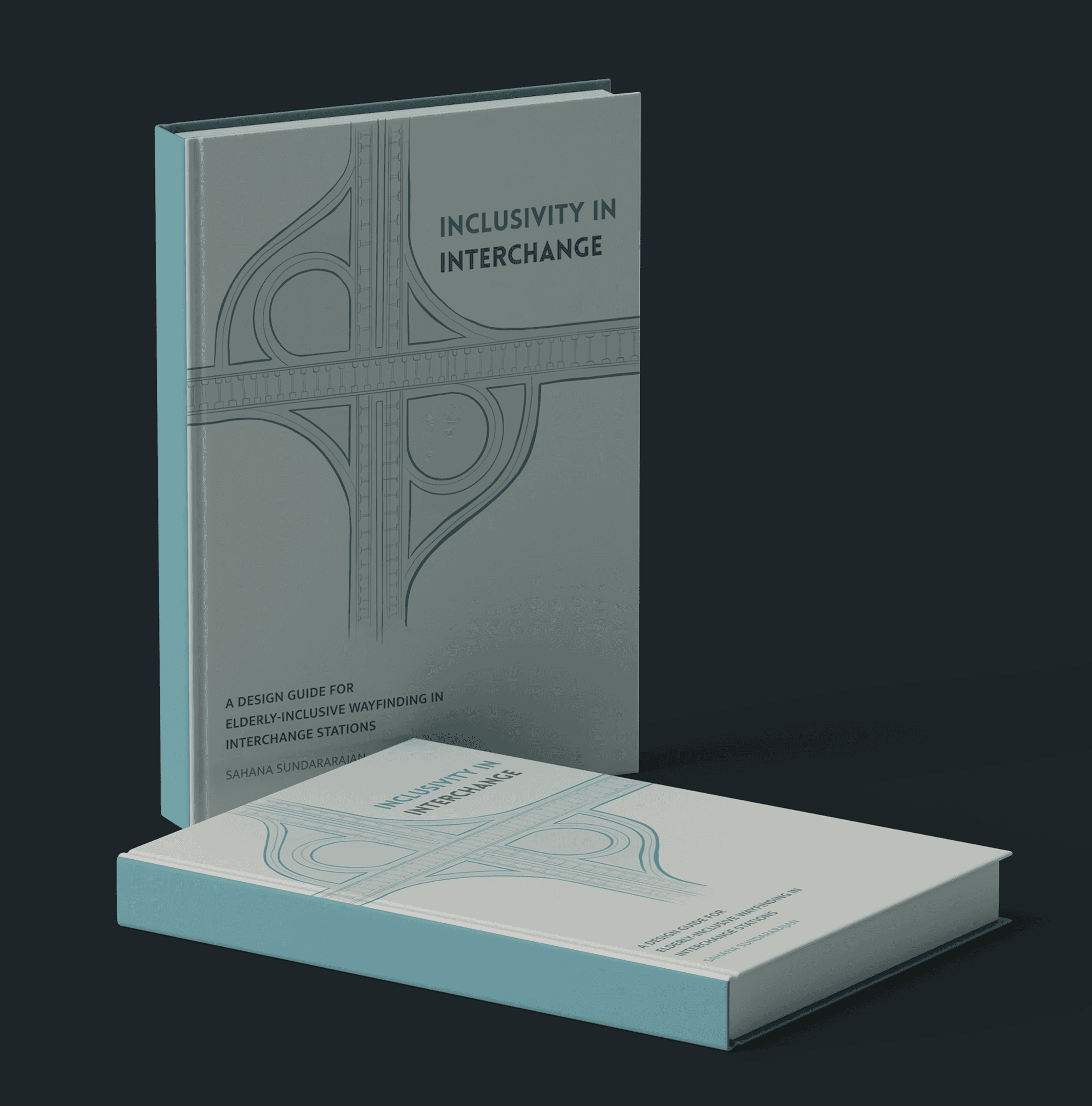
Inclusivity in Interchange
Rapid public transport systems are built for speed. But elderly commuters are often left behind since these spaces that fail to accommodate varying abilities. ‘Inclusivity in Interchange’ is a guidebook that proposes design principles and enhancements for more elderly-inclusive navigation in Bengaluru’s metro system.
DURATION
4 months
TYPE
Individual
KEYWORDS
Design research
Participatory Design
Way finding
TOOLS
Figma
Procreate
Adobe Photoshop
Adobe Illustrator
THE PROBLEM
Metro stations are busting with people. They are designed for autonomous, rapid movement - which contrasts with the slower pace of elderly individuals, resulting in confusion, exhaustion, and a heightened risk of injury.
Senior citizens who travel daily through the metro are more compromised due to their age, causing an exclusion by the system.
THE DESIGN
Inclusivity in Interchange
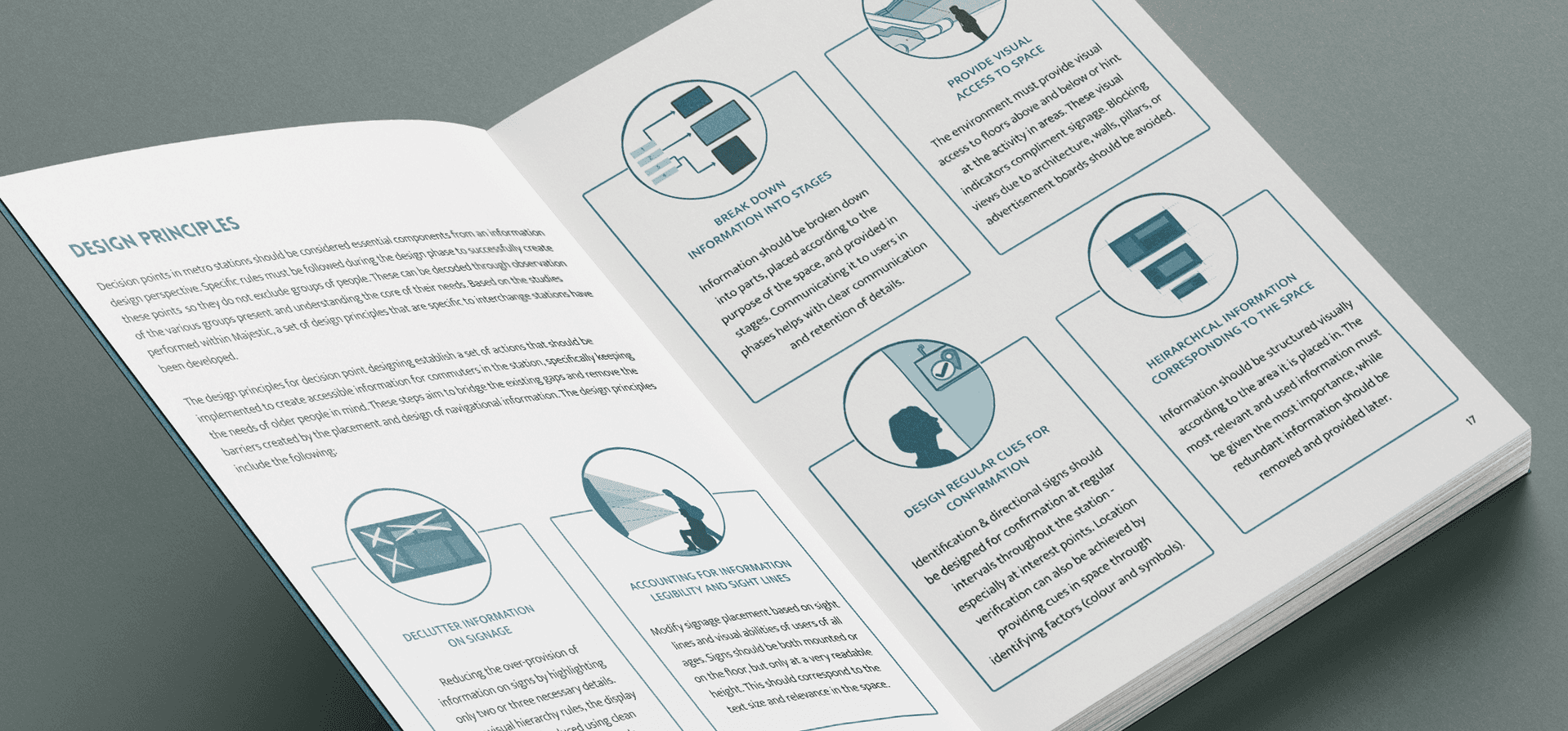
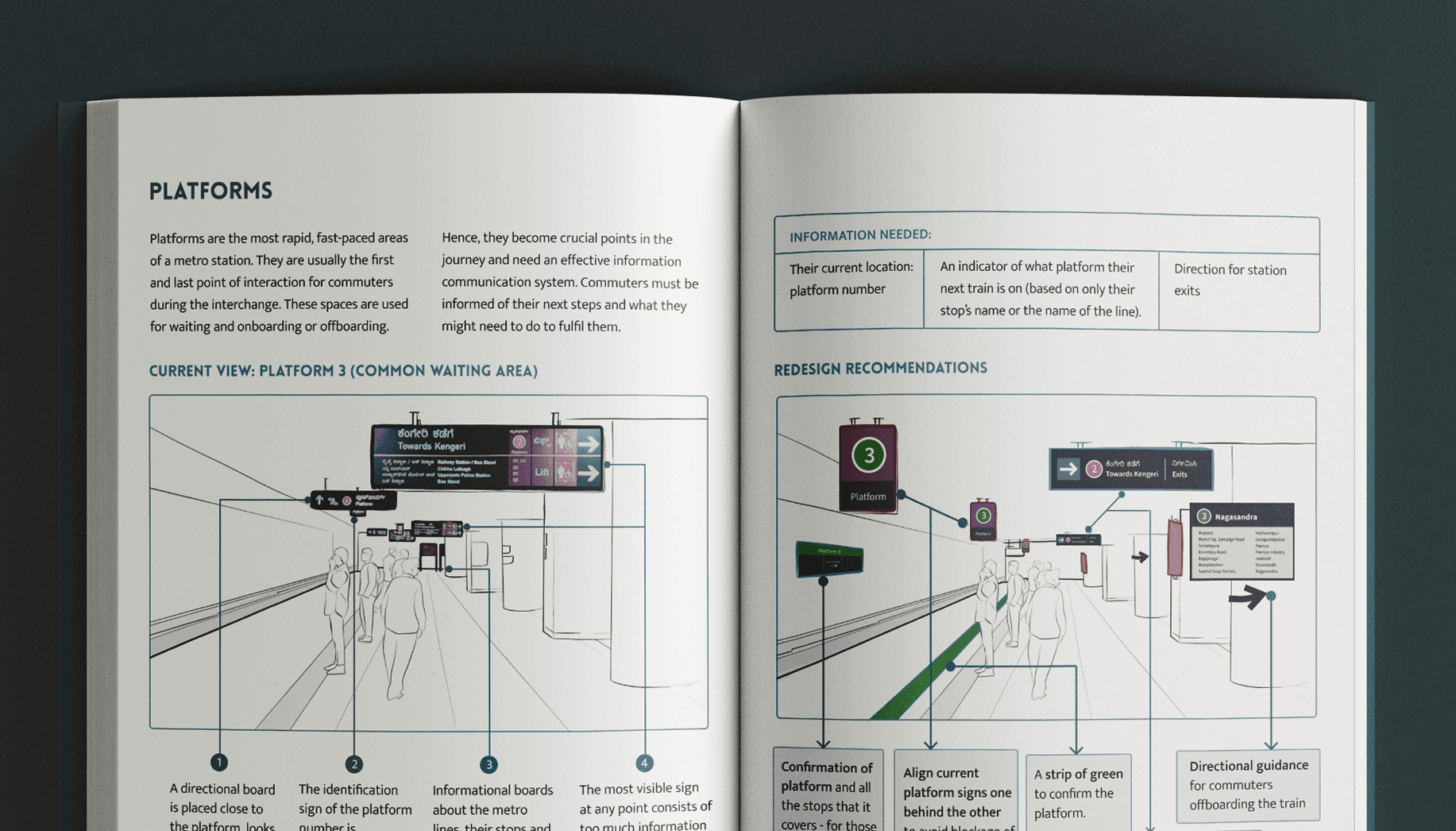
Inclusivity to Interchange proposes revised design principles & enhancements for metro stations in Bengaluru for more elderly-inclusive navigation. It consists of design principles, spatial design recommendations and design practices to avoid.
SITE RESEARCH
Participatory Research
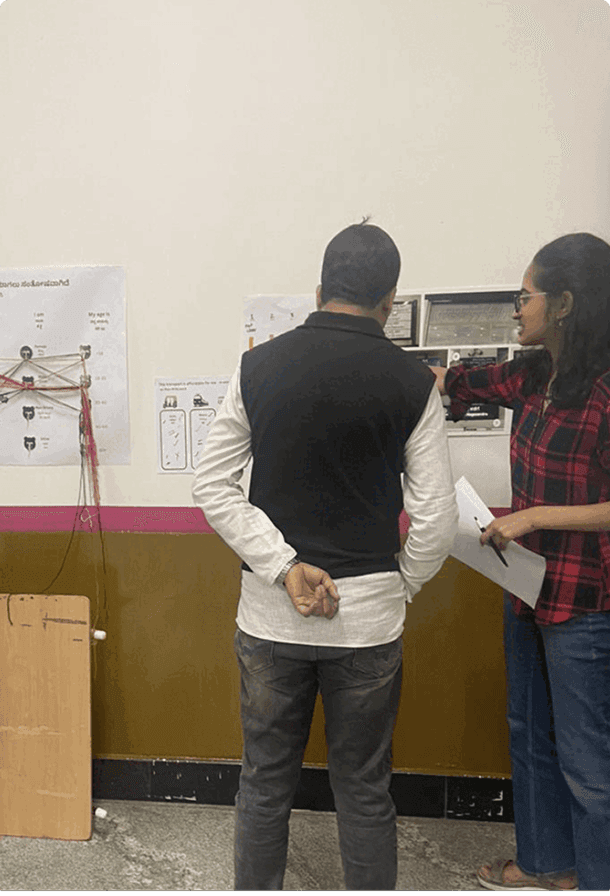
I used Participatory research to build an understanding of the existing wayfinding system from the users’ perspectives and also understand nuances of their experiences. The first few attempts failed due to the bustling nature of the site.
After multiple iterations, I created two participatory activities to identify a range of experiences with the system, shadowed users navigating between platforms and conducted semi-structured interviews.
ACTIVITIES ON SITE
Image Boards
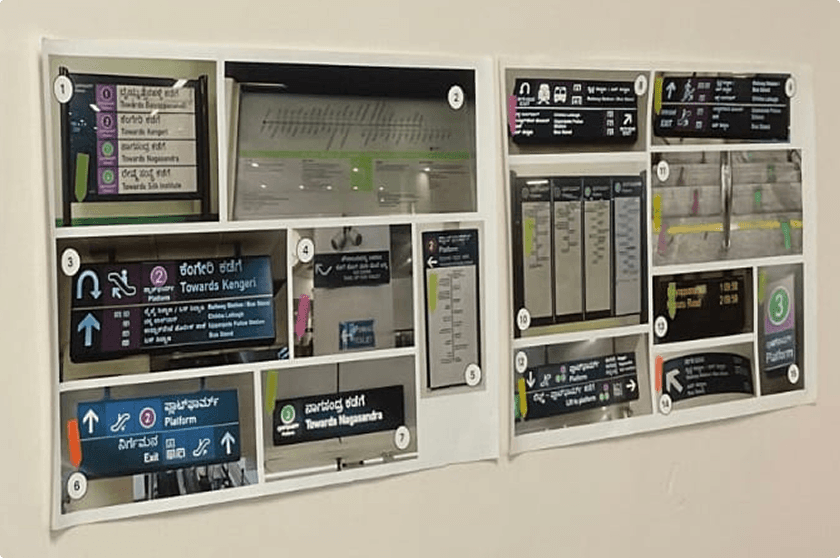
Most misinterpreted signs
Could not articulate the confusion
Signs couldn’t be studied out of context
Signs with less text and multilingual were clearest
Card Sorting
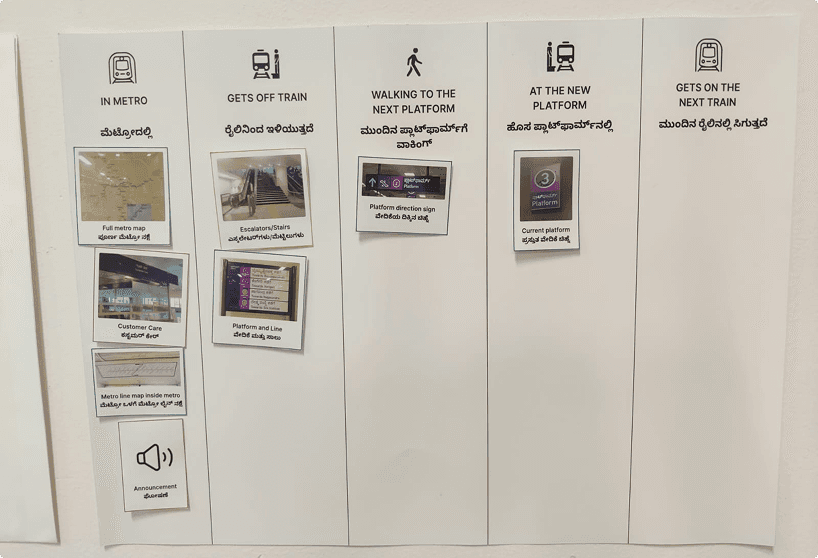
Guards, other people and announcements were most sought after
Cards were tough to recognize without context
Signs are only suitable for literate, regular users
So, who is excluded?
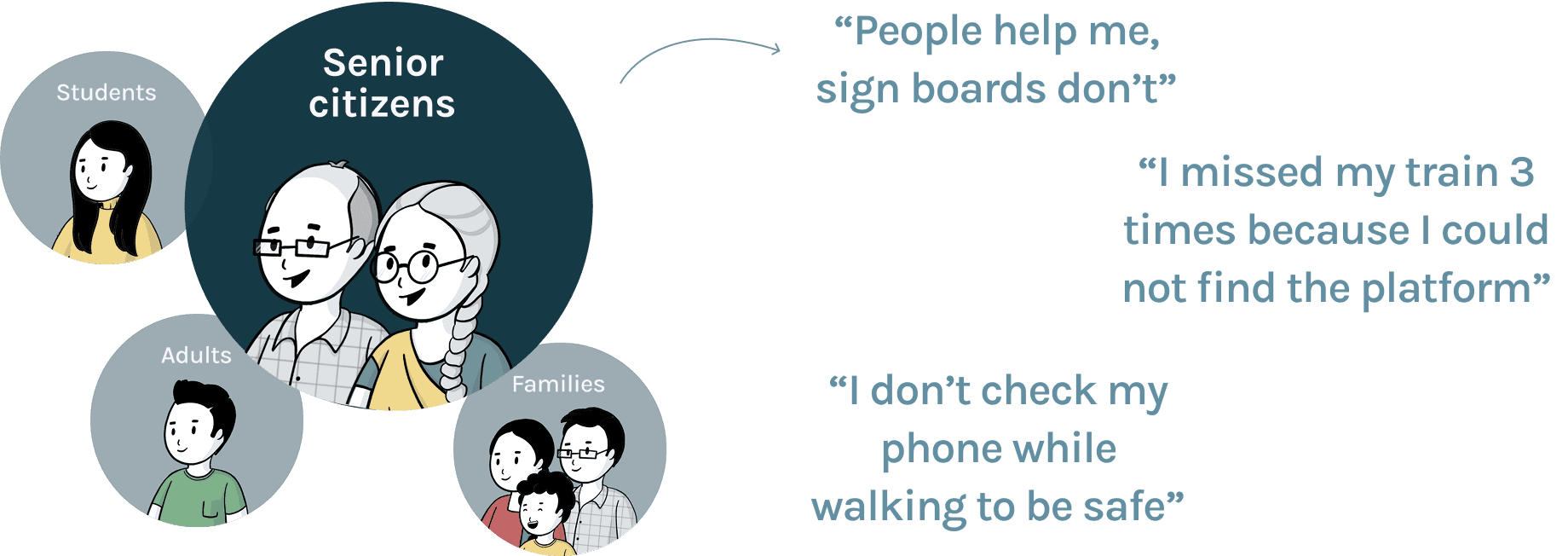
They face difficulties in interpreting a lot of information, especially quickly.
They experience poor or complete degradation of sight
They are usually unable to correct errors quickly
They have mobility difficulties; and are hence more prone to injuries
They experience limitations in terms of strength and stamina
They require frequent assistance
INTERVIEWS
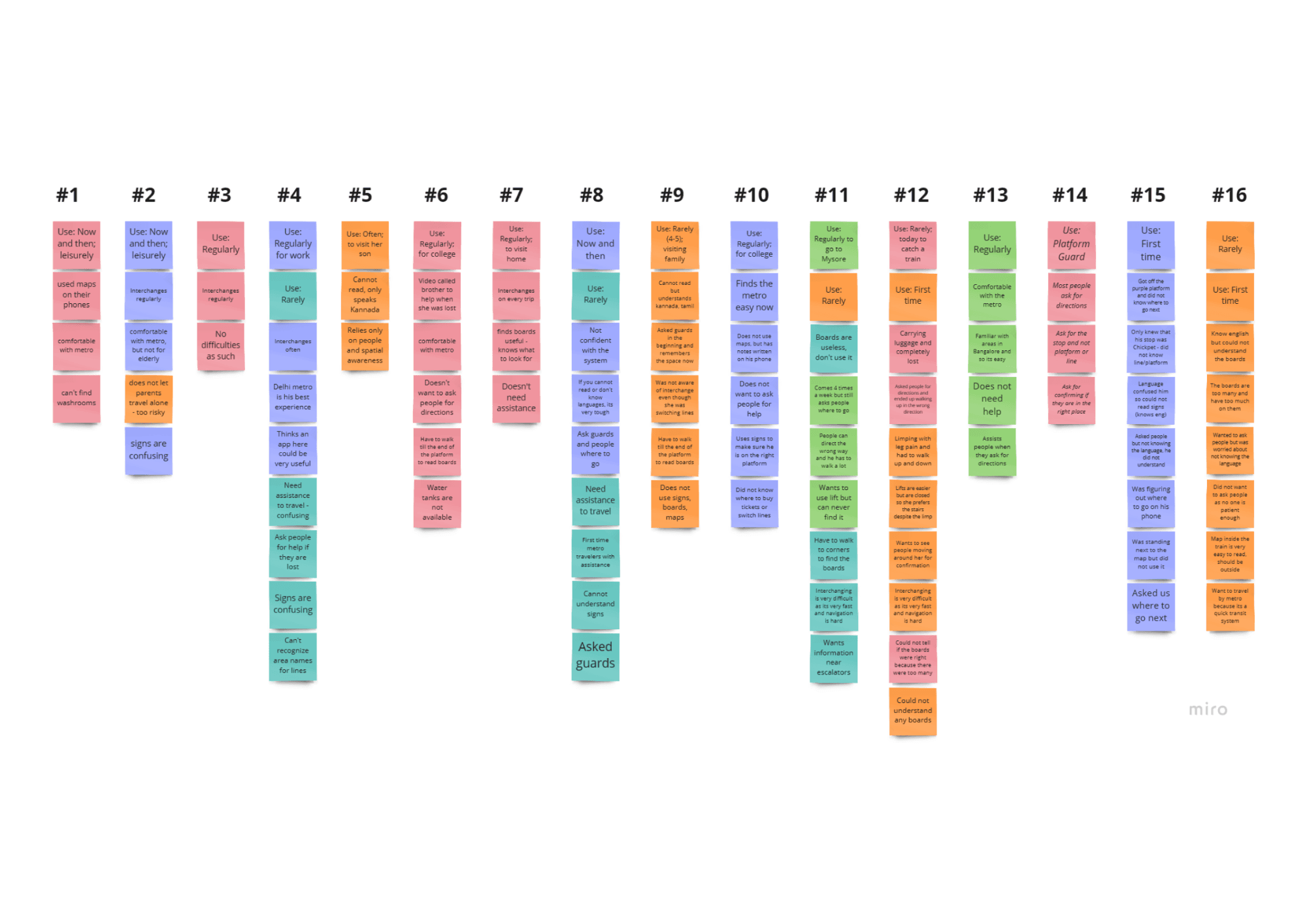
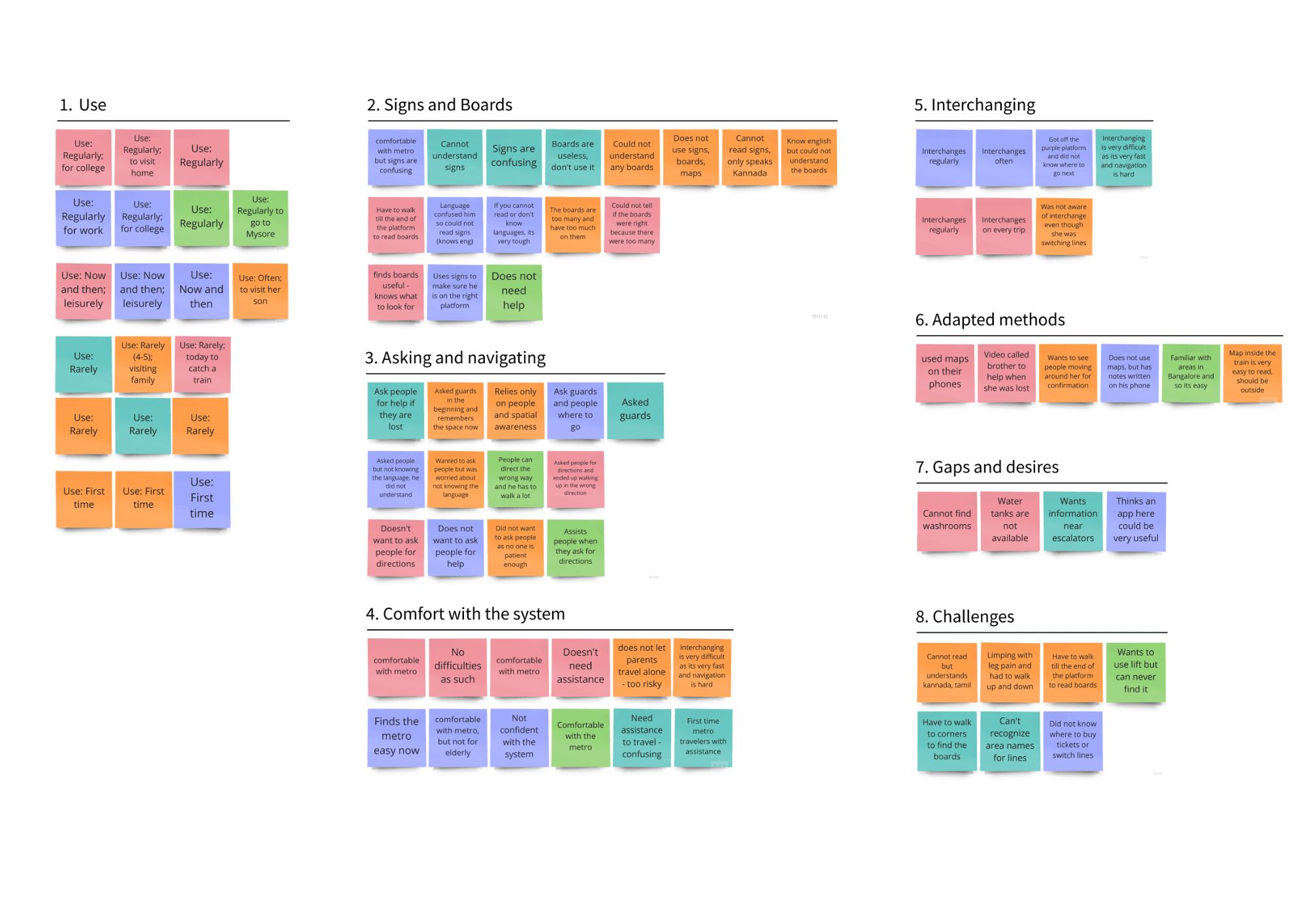
Saturating and grouping
I used the "Saturate and Group" method to identify the most prevalent themes that were present in the research. Responses from the interviews were split and color coded according to the demographics, and grouped based on the similarity.
MAPPING
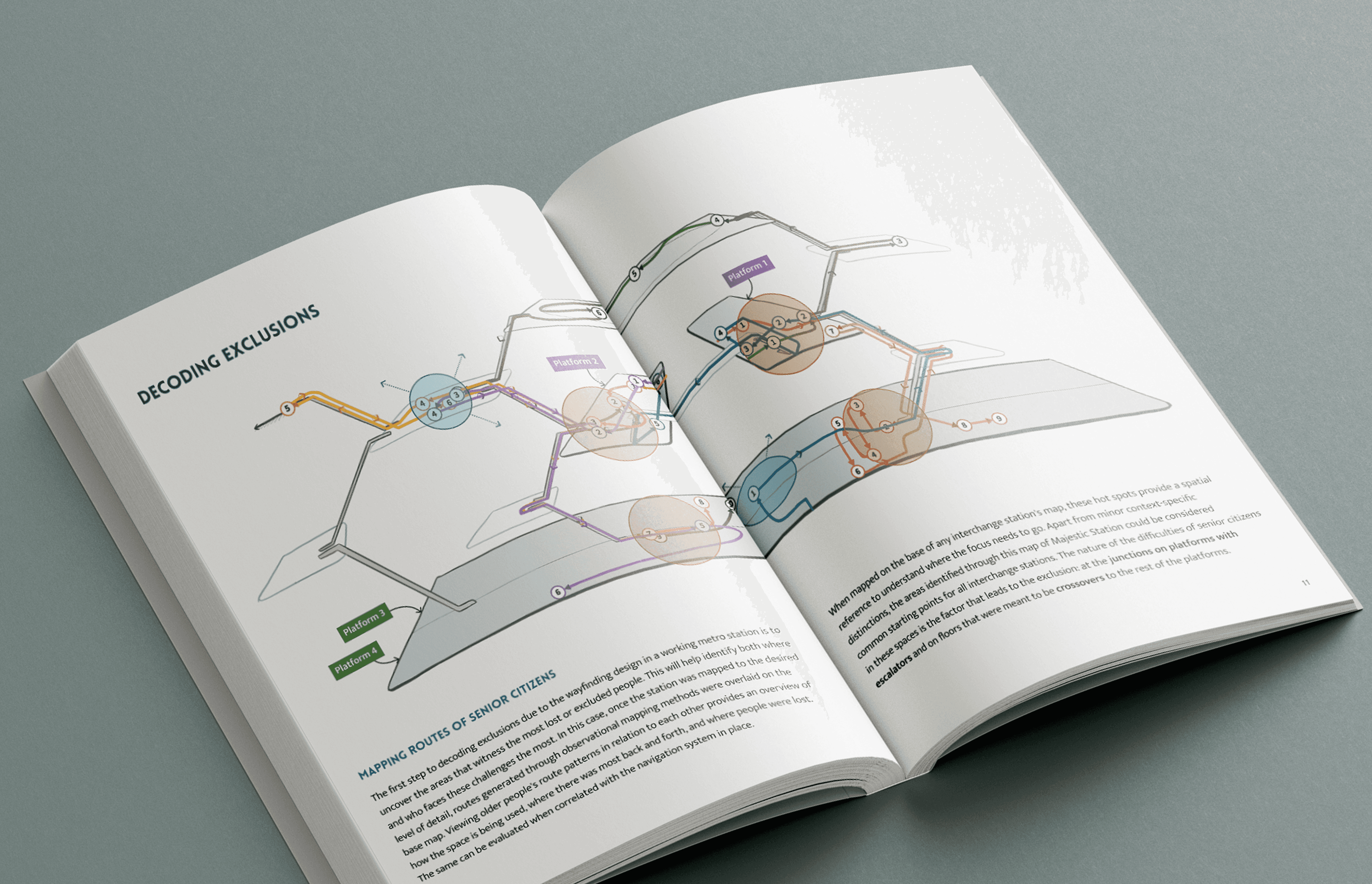
Decoding the exclusion
I shadowed senior citizens around the metro stations and overlayed their routes to visually identify spaces that were “excluding” them:
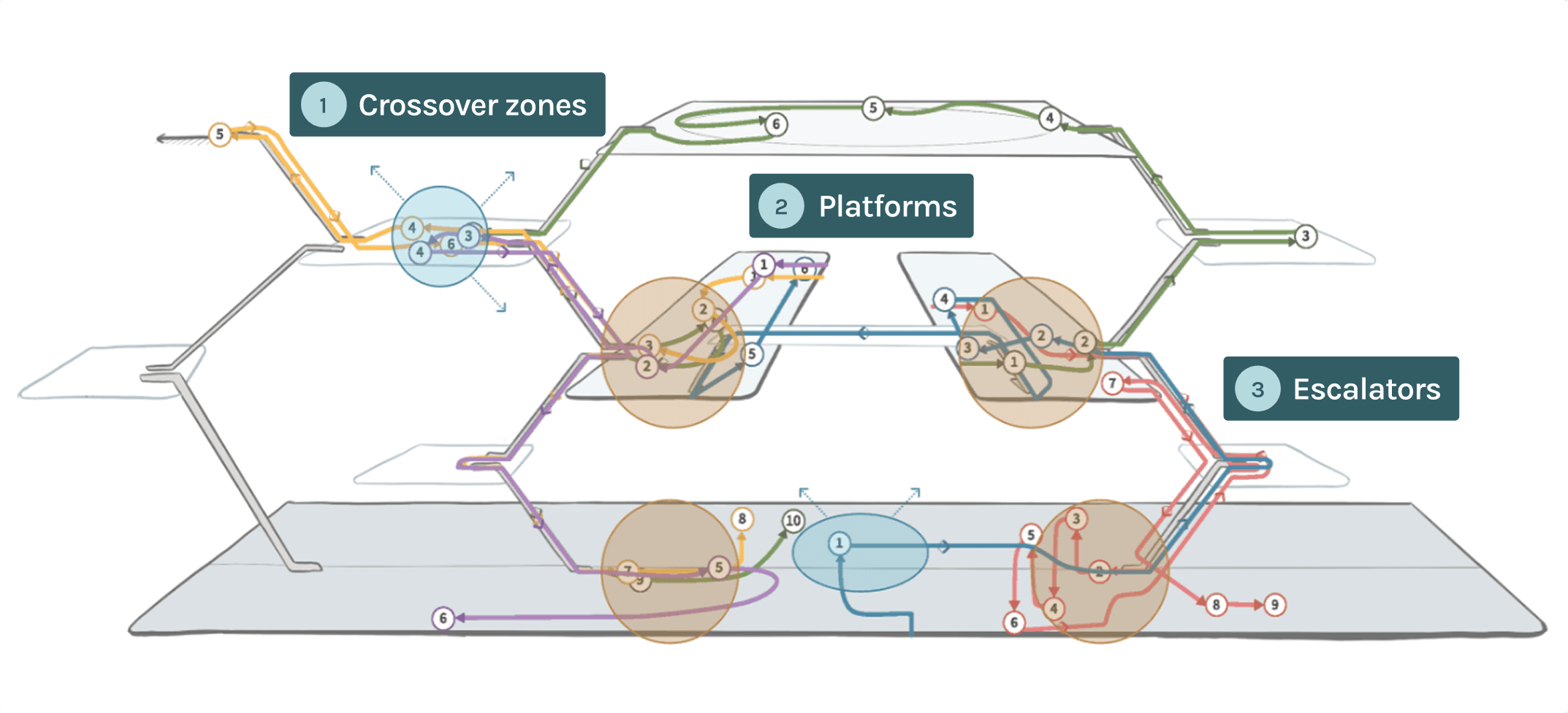
Visualization of where senior citizens were getting excluded
Evidence of exclusion at the station
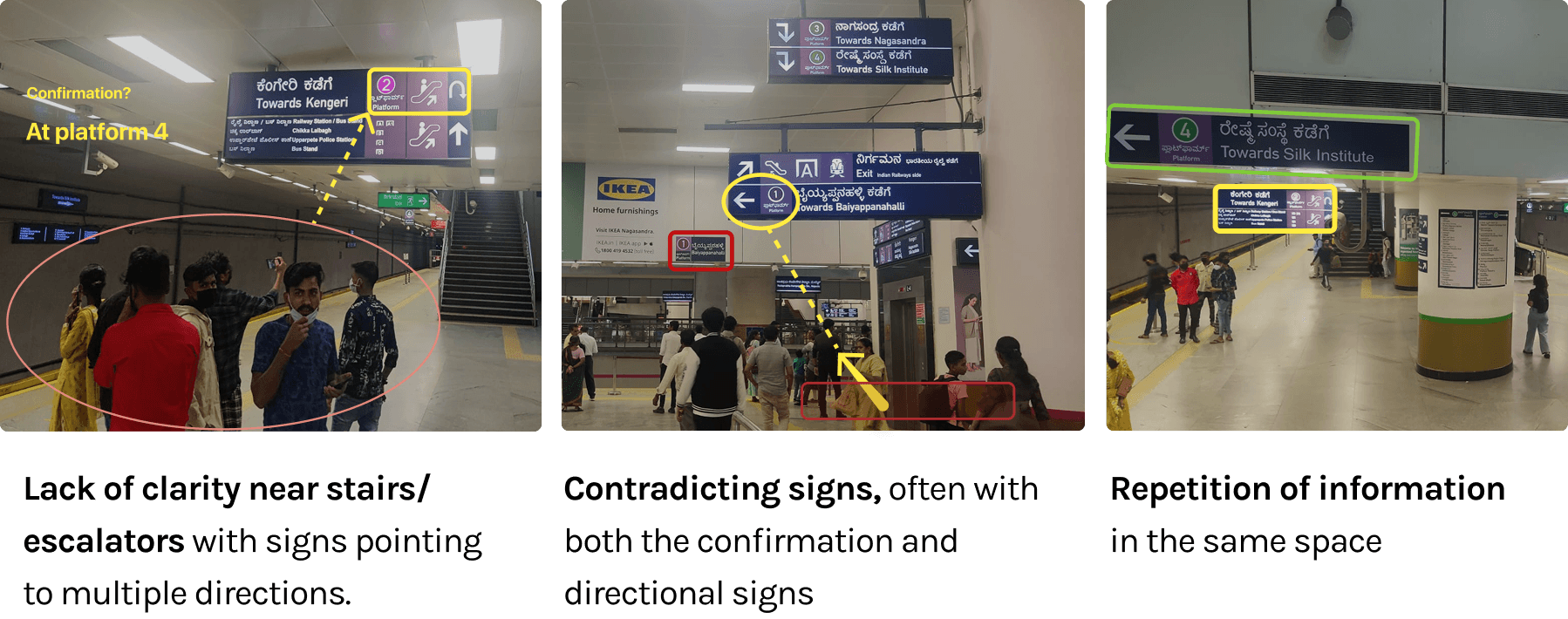
Changes needed in the system
Reorganization of platform area as a decision point: placement and design of information
Assistance specifically for old people with interchange and awareness of what the process entails
An easily navigable information system for old people with limitations and/ or without assistance
Reducing trial and error for the elderly, without overwhelming them with information
My reflections
Designing for extremes is not only a valuable thinking method for inclusion but could also potentially be great for business results. It addresses complexities and specialised needs that go unnoticed otherwise, which could work for users across the board
Digital is not the only way. Sometimes the most effective solutions are a combination of different interventions within a space. This is why an app was not a suitable intervention from this perspective.
PRESENTING AT THE
People City Transport PhD Conference 2024
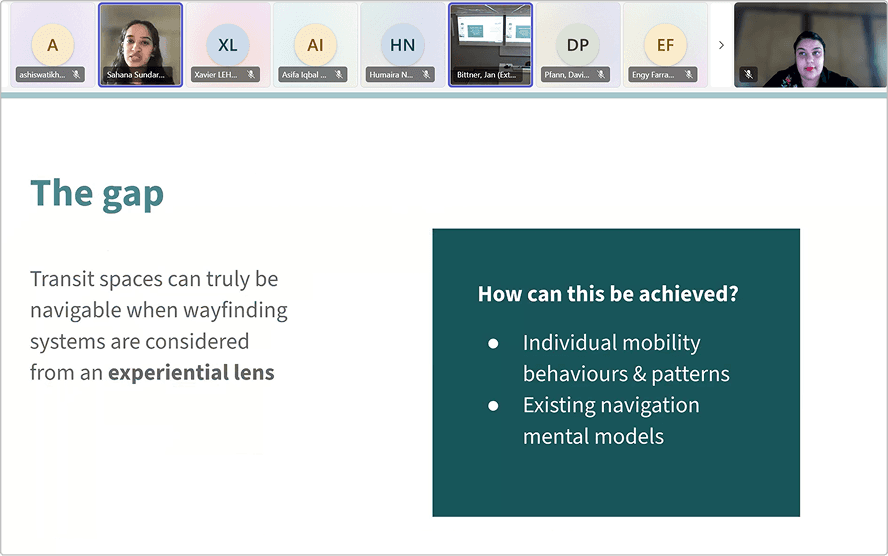
I had the opportunity to co-author an abstract with my professor, Lakshmi Srinivasan and present at the People City Transport PhD Conference 2024!
Check out the extended abstract:
Beyond Signage: Rethinking Wayfinding in Bengaluru’s Metro Stations